Eagles Rookie Trade Attempt: Why It Matters
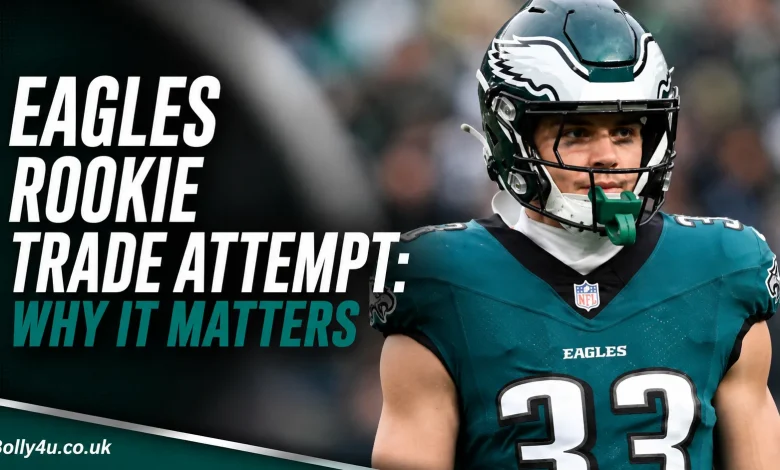
The eagles rookie trade attempt became a talking point because it showed how aggressively the Philadelphia Eagles were willing to act during the 2025 NFL Draft. At the center of the story was Alabama linebacker Jihaad Campbell, a player the Eagles valued highly enough to explore moving up the first-round board before finally completing a smaller trade with the Kansas City Chiefs.
For many fans, the situation raised several questions. Why would a team trade up only one spot? Why was Campbell still available late in the first round? What did Philadelphia see in him, and what does the move say about the team’s defensive plans?
The answer is not just about one draft pick. It is also about roster building, draft-day risk, positional value, injury evaluation, and how front offices protect themselves when a preferred player begins to slide. This article explains what happened, why the move mattered, and how the trade fits into the Eagles’ broader approach to building a competitive roster.
What Was the Eagles Rookie Trade Attempt?
The eagles rookie trade attempt refers to Philadelphia’s effort during the 2025 NFL Draft to move up and secure Alabama linebacker Jihaad Campbell. The Eagles eventually traded with the Kansas City Chiefs, moving from pick No. 32 to pick No. 31. Philadelphia received the 31st overall pick, while Kansas City received pick No. 32 and a fifth-round pick, No. 164 overall. The Eagles then selected Campbell with the 31st pick.
The phrase can sound broader than the final move itself. Reports from the team’s own coverage indicated that general manager Howie Roseman tried to move up earlier in the first round but could not complete a deal. Once Campbell remained available near the end of the round, Philadelphia made a smaller move to prevent another team from jumping ahead.
That distinction matters. The Eagles did not make a large jump into the middle of the round. They explored a bigger move, waited as the board developed, and then paid a smaller price to move one position. In draft terms, that is a controlled trade-up rather than a reckless gamble.
Why Jihaad Campbell Was the Target
Jihaad Campbell was one of the most athletic linebackers in the 2025 draft class. He played at Alabama, one of college football’s most demanding programs, and produced at a high level in 2024. According to the Eagles, Campbell led Alabama with 117 tackles, 11.5 tackles for loss, and five sacks that season. He was also named first-team All-SEC.
The attraction was not only his production. Philadelphia valued his versatility. Roseman described Campbell as explosive and said he could play inside linebacker or rush from the edge. Head coach Nick Sirianni also highlighted his speed, energy, and relentless effort.
That skill set is valuable in a modern defense. Linebackers are no longer judged only by their ability to stop runs between the tackles. They must cover space, match up with tight ends and backs, pursue mobile quarterbacks, and sometimes create pressure. Campbell offered Philadelphia a player who could potentially affect several areas of the defense.
The Eagles also viewed him as more than a late first-round talent. Team coverage stated that Philadelphia had Campbell graded as a top-10 player on its board. That does not mean every team agreed with the evaluation, but it explains why the Eagles were willing to act when he remained available at the end of Round 1.
Why the Eagles Traded Up Only One Spot
A one-spot trade can look strange at first. If the Eagles were already picking at No. 32, why give up an extra fifth-round pick to move to No. 31?
The answer is draft control. When a team waits at the end of a round, it is not only watching the team directly ahead. It is also watching every other club that might try to trade into that slot. Kansas City held pick No. 31. If another team wanted Campbell, it could have called the Chiefs and offered a deal. By trading up, Philadelphia removed that risk.
The cost was relatively modest compared with a larger jump. Moving from No. 32 to No. 31 cost the Eagles a fifth-round pick. Moving from No. 32 into the teens or early 20s would likely have required much more. The final move allowed Philadelphia to secure the player without surrendering major future draft capital.
This is a common draft-board tactic. Teams often value certain tiers of players. If only one player remains in a tier, a small trade-up can make sense. The Eagles appeared to believe Campbell was the last high-value player available for their board and roster needs.
The Trade Details
| Trade Element | Philadelphia Eagles | Kansas City Chiefs |
|---|---|---|
| Main pick received | Pick No. 31 | Pick No. 32 |
| Extra compensation | — | 2025 fifth-round pick, No. 164 |
| Player selected | Jihaad Campbell | Josh Simmons at No. 32, according to draft coverage |
| Main purpose | Secure Campbell before another team could move up | Add draft capital while moving down one spot |
The confirmed trade details are straightforward. The Eagles received the 31st pick from Kansas City. The Chiefs received the 32nd pick and a fifth-rounder, No. 164 overall. Philadelphia used the pick on Campbell.
The larger story is about why the Eagles believed that fifth-round cost was worth paying. In their view, the difference between getting Campbell and missing him was more important than holding one additional Day 3 selection.
Why Campbell Slid in the Draft
Campbell’s availability late in the first round was one of the reasons the move drew attention. A player viewed highly by Philadelphia did not come off the board until pick No. 31.
One factor was medical evaluation. Campbell had dealt with a shoulder issue and later recovered from surgery to repair a torn labrum. Reuters reported in June 2025 that he was expected to remain off the practice field until training camp while recovering. Defensive coordinator Vic Fangio said Campbell was working in meetings and doing suitable individual drills while recovering.
Medical concerns can affect draft position, even when teams still like a player’s talent. Clubs may differ on how they view recovery timelines, long-term risk, and positional value. Some teams may have been cautious. The Eagles, however, publicly stated they did not have long-term concerns about Campbell’s health.
Another factor may have been positional value. Off-ball linebackers are often drafted later than edge rushers, quarterbacks, offensive tackles, and cornerbacks. Even productive linebackers can slide if teams prioritize premium positions early. Campbell’s ability to rush the passer may have helped his value, but many evaluators still viewed him primarily as a linebacker.
Why the Move Fit the Eagles’ Roster
Philadelphia’s defense has often depended on depth, versatility, and front-seven rotation. Campbell fit that profile because he could potentially contribute in different roles. He was not limited to one narrow assignment.
At inside linebacker, he could give the Eagles speed and range. At the line of scrimmage, he could be used as a pressure piece in certain packages. That flexibility matters for a coordinator who wants to disguise pressure, change fronts, and avoid predictable alignments.
The selection also challenged an old perception about Philadelphia’s approach to linebackers. The Eagles had not selected an off-ball linebacker in the first round since Jerry Robinson in 1979. Campbell ended that long gap.
That does not mean the Eagles suddenly changed their entire team-building philosophy. It means Campbell was valued as a special case. The team did not simply draft a linebacker because of need. It drafted a player it believed had rare value at that point in the round.
The Role of Howie Roseman’s Draft Strategy
Howie Roseman has built a reputation for being active during the draft. The Eagles often move up, move down, or use future picks to adjust their position. The Campbell trade followed that pattern but with a careful balance of aggression and restraint.
The Eagles explored moving up earlier. When that did not happen, they did not overpay. They waited. When Campbell reached pick No. 31, they made a smaller deal. That approach shows a front office trying to manage both opportunity and cost.
Draft trades always involve uncertainty. No team knows exactly how a player will develop. But teams can control process. In this case, Philadelphia identified a player it valued, monitored his slide, protected its position late in the round, and avoided a much larger trade price.
That is why the eagles rookie trade attempt is best understood as a draft-board decision rather than a dramatic gamble. The Eagles were aggressive enough to secure their target but patient enough not to spend more than necessary.
What the Trade Says About Philadelphia’s Defensive Vision
Campbell’s selection suggested that Philadelphia wanted more speed and flexibility in the middle of its defense. Modern offenses force linebackers to make difficult decisions. They must defend option looks, cover short zones, close throwing lanes, and tackle in space.
Campbell’s athletic profile made him attractive for those demands. His college production showed he could find the ball. His sack and tackle-for-loss numbers showed he could also contribute near the line of scrimmage.
The Eagles also had veterans and younger players already in the linebacker room. That meant Campbell did not have to carry the entire defense immediately. Instead, he could develop into a role based on health, practice performance, and how the coaching staff wanted to use him.
Fangio’s comments after the draft suggested that Campbell would begin inside when healthy, while any edge work would depend on evaluation after recovery. That approach is practical. A versatile player still needs a defined starting point before expanding his role.
Benefits of the Trade Attempt
The main benefit was simple: Philadelphia got the player it wanted. When a team believes a prospect is much better than the remaining board, securing him can be worth a reasonable extra cost.
The move also gave the Eagles a first-round player with multiple possible uses. Campbell could help in run defense, coverage, pursuit, blitz packages, and pressure looks. Not every rookie linebacker can handle all of those responsibilities immediately, but the physical tools were part of his appeal.
Another benefit was contract control. First-round picks come with a fifth-year option under NFL rules. That can be useful if the player develops into a high-level starter. For a team trying to maintain a deep roster, cost-controlled talent is valuable.
The trade also protected Philadelphia from being beaten by another team at the final moment. If the Eagles had stayed at No. 32 and another club had moved to No. 31, the entire outcome could have changed.
Risks and Limitations
The trade also carried risk. The most obvious concern was health. Campbell’s shoulder recovery delayed his on-field work in 2025, and any missed practice time can slow a rookie’s transition. A player can attend meetings and learn the system, but live defensive reps are difficult to replace.
There was also role uncertainty. Campbell had the ability to play inside and rush from the edge, but versatility can sometimes delay clarity. A young player needs enough focus to master assignments. If a team moves him around too quickly, development can become harder.
The positional question also matters. Some fans and analysts may question using a first-round pick on an off-ball linebacker. That debate is not new. Teams often reserve first-round picks for positions with higher market value. The Eagles’ answer appeared to be that Campbell was not a typical off-ball linebacker because of his explosiveness and pass-rush potential.
Finally, any draft trade reduces flexibility. Even a fifth-round pick has value. Day 3 picks can become depth players, special teams contributors, or trade assets. Philadelphia decided Campbell was worth that cost, but the final judgment depends on his development.
Common Misunderstandings About the Trade
One common misunderstanding is that the Eagles made a desperate move. The evidence suggests a more measured decision. They tried to move up earlier, did not complete a costly deal, and then made a smaller trade when the board came to them.
Another misunderstanding is that trading up one spot is pointless. In reality, the pick before yours can be sold to another team. The Eagles were not only negotiating against Kansas City’s needs. They were protecting against the wider market.
Some readers may also assume Campbell fell only because teams disliked him as a player. Draft slides are rarely that simple. Medical reviews, positional value, team needs, board structure, and trade options all affect where a player lands.
A final misunderstanding is that the trade guarantees immediate success. It does not. It only shows that the Eagles valued Campbell highly. His career will depend on health, coaching, role clarity, adaptation to NFL speed, and consistent performance.
Read must: United Airlines Flight UA770 Emergency Diversion
Related Terms and Concepts
Draft Capital
Draft capital refers to the value of a team’s picks. Higher picks are more valuable, but later picks still matter. When Philadelphia gave up pick No. 164 to move one spot, it spent a small portion of its draft capital to secure Campbell.
Trade-Up
A trade-up happens when a team gives assets to move to an earlier pick. Teams usually trade up when they believe a specific player will not be available later.
Off-Ball Linebacker
An off-ball linebacker usually lines up behind the defensive line rather than directly on the line of scrimmage. This role often involves tackling, coverage, communication, and pursuit.
Edge Rusher
An edge rusher attacks from the outside of the offensive line, usually trying to pressure the quarterback. Campbell’s ability to rush from the edge made him more versatile than a traditional linebacker.
Fifth-Year Option
First-round picks can be controlled for a fifth season through a team option. This can give a club extra flexibility if the player develops into a major contributor.
What Fans Should Watch Going Forward
Campbell’s long-term value will depend on several practical factors. The first is health. His shoulder recovery was a key early storyline, and his ability to return fully to contact work mattered for his rookie development.
The second is role. If the Eagles settle him into a clear inside linebacker role first, he may develop faster. If they add edge responsibilities later, that could expand his value without overloading him too early.
The third is snap usage. Some rookies begin as rotational players before becoming starters. Others take on larger roles quickly because of injuries or roster needs. Campbell’s usage would depend on practice performance, health, and the coaching staff’s confidence.
The fourth is how he performs in coverage. Modern linebackers must survive against passing attacks. If Campbell can cover ground and handle assignments, his value rises significantly.
The final factor is consistency. Splash plays matter, but coaches need linebackers who communicate, fit runs correctly, tackle reliably, and avoid assignment errors.
Key Takeaways
- The eagles rookie trade attempt centered on Philadelphia’s pursuit of Alabama linebacker Jihaad Campbell in the 2025 NFL Draft.
- The Eagles ultimately traded from pick No. 32 to No. 31 with the Kansas City Chiefs, giving up a fifth-round pick to secure Campbell.
- Philadelphia reportedly explored moving higher but completed a smaller trade when Campbell remained available late in Round 1.
- Campbell appealed to the Eagles because of his speed, production, versatility, and ability to play inside or contribute as a pass-rush option.
- His draft position may have been affected by medical evaluation and positional value, but the Eagles publicly expressed confidence in his long-term outlook.
- The move was aggressive but measured, showing how teams use small trades to protect against other clubs jumping ahead.
- Campbell’s final value will depend on health, role clarity, development, and how effectively Philadelphia uses his skill set.
FAQs
What was the eagles rookie trade attempt?
It was Philadelphia’s effort during the 2025 NFL Draft to move up and select Alabama linebacker Jihaad Campbell. The Eagles eventually traded one spot up with the Kansas City Chiefs and selected him at No. 31.
Who did the Eagles trade with?
The Eagles traded with the Kansas City Chiefs. Philadelphia received pick No. 31, while Kansas City received pick No. 32 and a fifth-round pick, No. 164 overall.
Why did the Eagles move up only one pick?
They moved up to prevent another team from trading into Kansas City’s spot and taking Campbell. A one-pick move can matter when a team believes its preferred player may not last.
Why was Jihaad Campbell important to Philadelphia?
Campbell offered speed, production, and defensive flexibility. The Eagles viewed him as a player who could help inside at linebacker and possibly contribute as a pass-rusher in certain packages.
Did Campbell have injury concerns before joining the Eagles?
Yes. Campbell was recovering from shoulder surgery after dealing with a torn labrum. The Eagles said they did not have long-term concerns, but his recovery affected his early on-field availability.
Was this a risky trade?
Every draft trade carries some risk. In this case, the cost was a fifth-round pick, which made the move less expensive than a major trade-up. The risk depends mostly on Campbell’s health and development.
Does this mean the Eagles changed how they value linebackers?
Not necessarily. It shows they valued Campbell as a special player at that point in the draft. His versatility likely made him more appealing than a traditional linebacker.
What should fans watch most closely?
Fans should watch Campbell’s health, defensive role, coverage ability, tackling consistency, and whether the Eagles use him only inside or also as a pressure player.
Conclusion
The eagles rookie trade attempt was not just a small draft-night transaction. It was a clear example of how a team acts when its board, roster needs, and risk tolerance meet at the same moment. Philadelphia wanted Jihaad Campbell, explored ways to move higher, and eventually paid a modest price to move from No. 32 to No. 31.
The move made sense from the Eagles’ perspective because Campbell offered rare athletic traits, strong college production, and positional flexibility. At the same time, the decision carried real questions about health, role, and development. Those questions are normal with any rookie, especially one recovering from an injury.
Understanding the trade requires looking beyond the one-pick move. The real story is about how Philadelphia protected its preferred outcome while avoiding a larger cost. Campbell’s career will determine how the move is remembered, but the process behind it was calculated and clear.