Tentacle Puns Unleashed: A Deep Dive into Hilarious, Clever, and Cephalopod-Inspired Wordplay
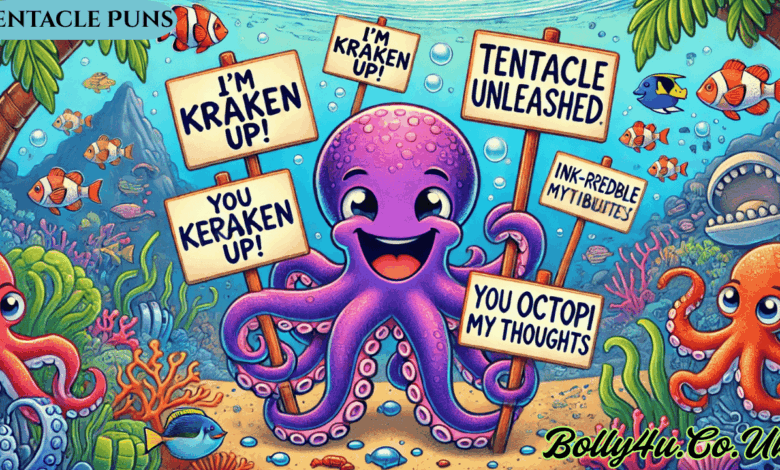
Why Tentacle Puns Are a Kraken Good Time
If you’re the type of person who finds yourself chuckling at a clever play on words, then you’re in for a treat. Tentacle puns are one of the quirkiest and most delightful forms of humor, wrapping around language in unexpected and hilarious ways. Whether you’re a marine biology nerd, an anime fan, a pun enthusiast, or just someone with a love for squid-tastic humor, tentacle puns offer a realm of fun that is as deep as the ocean.
But what exactly are tentacle puns? In essence, they are puns—plays on words—that incorporate or center around “tentacle” or related aquatic creature imagery. Think octopuses, squids, krakens, and the myriad of cultural references tied to these multi-limbed sea creatures. From subtle double entendres to laugh-out-loud wordplay, tentacle puns have infiltrated pop culture, memes, literature, and even marketing slogans.
In this article, we’ll take a deep dive (pun intended) into the ocean of tentacle puns, exploring their humor, categories, cultural significance, and why they continue to “suck” us into their world.
The Anatomy of a Tentacle Pun: What Makes Them Work?
To appreciate tentacle puns, it’s important to understand what makes a pun work in the first place. A pun is typically based on a word or phrase that has multiple meanings or sounds like another word. Tentacle puns often exploit marine terminology, fishy homophones, or idiomatic expressions turned on their head to include aquatic limbs.
Here’s a breakdown:
-
Word Substitution: Swapping a regular word with one involving “tentacle” or “squid”—e.g., “inkredible” instead of “incredible”.
-
Sound Alike Puns: Words that sound similar to aquatic terms—e.g., “I’m kraken up!” (cracking up).
-
Double Meanings: Jokes that carry a hidden or secondary meaning, often cheeky—e.g., “That octopus is very handsy!”
These puns work best when they catch the listener off guard, delivering a punchline that’s both intelligent and hilarious.
Tentacle Puns That’ll Have You Ink-laughing
Let’s get to the fun part. Here’s a compilation of some of the best tentacle puns that are guaranteed to make you laugh, groan, or maybe both.
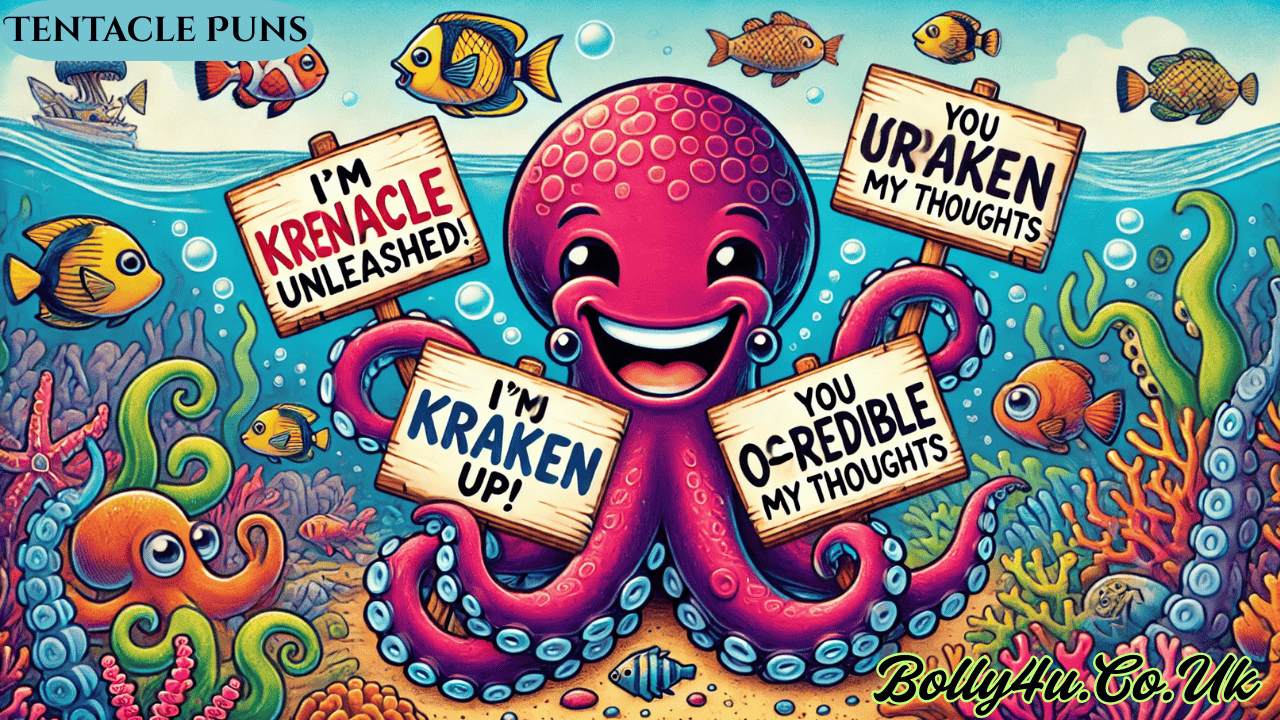
Funny Tentacle Puns:
-
“You octopi my thoughts.”
A clever romantic pun with cephalopod charm. -
“This joke is ink-redible!”
Perfect for when you’re proud of your tentacle wit. -
“Quit squidding around!”
A fantastic way to tell someone to stop being silly. -
“Kraken jokes like it’s my job.”
Channeling your inner sea monster comedian. -
“I’m suckered into this conversation.”
A literal and metaphorical pun—tentacles have suction cups, after all. -
“Cephalopods? More like cephalo-gods of pun!”
For the truly devoted tentacle pun connoisseur. -
“I’d tell you more tentacle puns, but I’m too tied up right now.”
Witty and perhaps a little risqué.
These puns can be used in memes, T-shirts, captions, or even text messages to add a splash of humor to any day.
Tentacle Puns in Pop Culture: From Kraken to Anime
Tentacle puns aren’t just for jokes between friends. They’ve permeated popular culture in a big way. From mythological sea monsters to modern anime tropes, tentacle puns serve as comedic relief, parody, or even satire.
Mythology and Fantasy:
In stories featuring sea creatures like the Kraken or Cthulhu, writers often lighten the mood with puns:
-
“Release the Kraken… of jokes!”
-
“That monster has arms for days—and punchlines to match.”
Anime and Manga:
The anime world is no stranger to tentacle references, sometimes controversial, but often exaggerated for comedic effect. Even shows that focus on marine life or fantasy creatures sneak in a pun or two:
-
“He’s got tentacle skills!”
-
“That attack was a sucker punch—literally.”
Memes and Internet Culture:
Social media has embraced the tentacle pun full-throttle:
-
Image of a squid: “I’m armed and dangerous.”
-
Octopus reading a book: “I’m well-read… eight times over.”
The internet, with its love for wordplay and visual gags, has become the perfect environment for ten-tacle puns to flourish.
Tentacle Puns in Marketing: Ink Your Brand with Humor
Surprisingly, even the corporate world has found a place for tentacle puns. Companies use them to stand out, especially brands in the food, tech, or entertainment sectors.
Food & Beverage:
Seafood restaurants especially enjoy pun-heavy branding:
-
“Get hooked on our ink-credible sushi!”
-
“We’ve got a kraken menu!”
Tech & Startups:
Creative startups name their platforms after squids or use pun-laden taglines like:
-
“TentacleTech: Reaching into the future.”
-
“Sucker for innovation? We’ve got you covered.”
Entertainment:
Shows, games, or podcasts use tentacle humor to attract niche audiences:
-
“The Tentacle Times: News you can’t shake off.”
-
“Kraken Wise: A pun-filled podcast about myths and monsters.”
Using ten tacle puns is not just about laughs—it’s about creating memorable branding.
Tentacle Puns and Linguistics: The Science Behind the Laughs
Puns are a fascinating intersection of humor and language. Linguistically, tentacle puns tap into our brain’s ability to resolve ambiguity. When you hear “I’m kraken up,” your brain does a double-take, processing both the literal and figurative meanings.
This cognitive surprise leads to laughter or groans, and that’s exactly why puns work. With ten tacle puns, the absurdity adds an extra layer of joy. The more unexpected the twist, the better the laugh.
Studies show that pun-lovers tend to be more creative thinkers. So the next time you drop a pun like “Don’t be so squid-ish,” just remember—you’re flexing your intellectual muscles.
Tentacle Puns in Literature and Fiction
Literature, especially fantasy and sci-fi, often uses cephalopod creatures symbolically. Writers have embraced tentacle humor in everything from poetry to novels.
Classic Examples:
-
“The Kraken” by Tennyson inspired many reinterpretations, some humorous.
-
Sci-fi authors often use alien squid-like species with quirky names like “Tentaclor” or “Squooshian Ambassador.”
Modern Fiction:
Children’s books, in particular, are rich with tentacle puns:
-
“Octavia and Her 8-Legged Adventures” plays on phrases like “hands-on learning.”
-
“Captain Kraken’s Grammar Bootcamp” features wordplay and learning via tentacle characters.
These stories make learning and reading more enjoyable, especially when puns are part of the narrative.
How to Create Your Tentacle Puns
Want to craft your tentacle puns? Follow these simple tips:
-
Find Tentacle-Related Words: Think “squid,” “octopus,” “ink,” “sucker,” “kraken,” etc.
-
Play with Common Phrases: Take popular idioms or sayings and sea-ify them.
-
“All hands on deck.” → “All arms on deck!”
-
“Don’t lose your grip” → “Don’t lose your suckers.”
-
-
Use Rhymes and Sound-Alikes: Words like “ink” sound like “incredible” → “incredible.”
-
Experiment with Puns in Context: Fit them naturally into conversations or themes.
Remember, the more outrageous or unexpected, the better.
Tentacle Puns for Every Occasion
You can use tentacle puns anywhere—birthday cards, Instagram captions, pick-up lines, dad jokes, or even Halloween costumes.
Pick-Up Lines:
-
“Are you an octopus? Because you’ve got a grip on my heart.”
-
“I must be a tentacle because I’m wrapped up in you.”
Social Captions:
-
“Feeling Tentacool today.”
-
“Just kraken on with life!”
Holiday Cards:
-
“Squidding you a merry Christmas.”
-
“Hope your birthday is tentacle-tastic!”
These make any occasion more memorable and a lot more fun.
Conclusion: Why Tentacle Puns Have a Hold on Us
Ten-tacle puns are a niche form of humor, but they resonate with a wide range of audiences. They’re clever, whimsical, and versatile. From pop culture to linguistics, from memes to marketing, tentacle puns show us that humor doesn’t have to be dry—it can be delightfully aquatic.
So next time you want to make someone laugh, try wrapping your mind around a tentacle pun. Who knows? You might just become the kraken king or queen of comedy.
Also Read: Animeidhen: The Ultimate Guide to Understanding and Exploring Animeidhen